



Learning how to grow social media followers for your business isn’t just about vanity metrics; it’s about building a community that engages, trusts your brand and ultimately drives conversions. Followers amplify your content, provide social proof and help you reach new audiences. People follow brands that provide useful, entertaining or emotionally resonant content, so a one‑size‑fits‑all approach doesn’t work. Whether you’re a small local business or a global brand, these actionable tips will help you build a loyal, engaged following across platforms.
Why Social Media Followers Matter
Before diving into tactics, it’s important to understand why social media followers are important.
Followers represent potential customers and advocates. Social media marketing is about showing up where your audience already is and making meaningful connections. Done right, it builds visibility, earns trust and drives real business results. A well‑crafted strategy maps goals and tactics to business outcomes such as brand awareness, lead generation, sales or customer service. Rather than chasing popularity for its own sake, focus on attracting high‑intent followers who align with your ideal customer profile.
Core Principles for Growing Followers
With these principles in mind, let’s walk through actionable steps to grow your social media following.
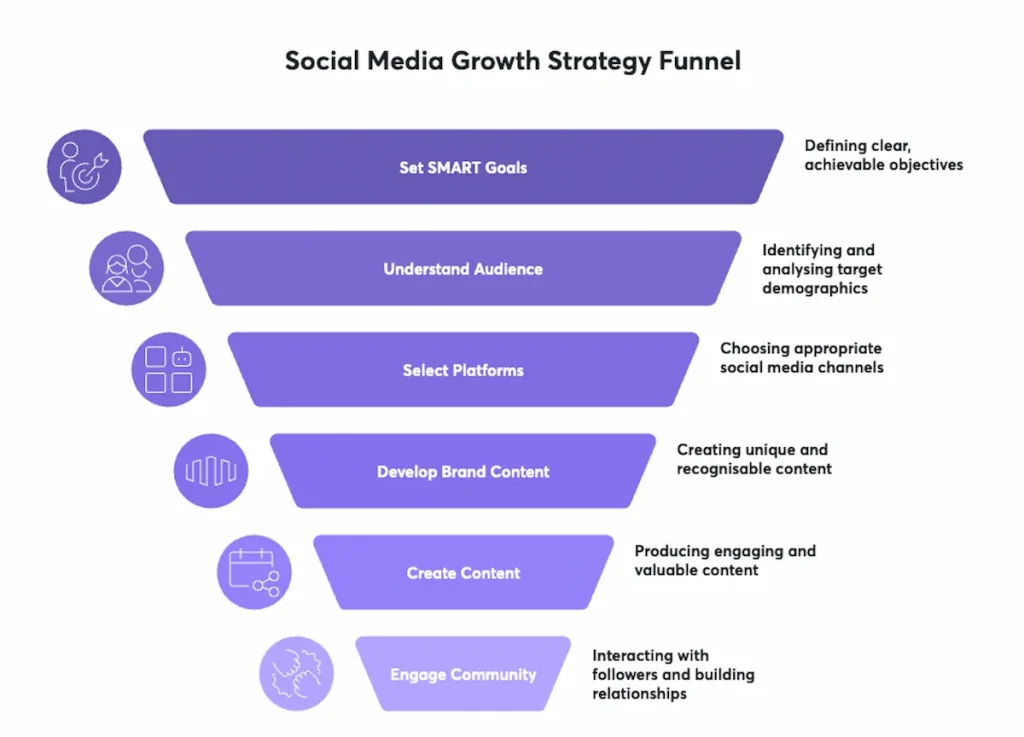
17 Ways to Improve Follower Growth
1. Set SMART Goals for Follower Growth
Goals provide a direction for your social media efforts. Start with 1-3 core objectives that align with your business needs. A SMART goal might be “Increase Instagram followers by 20% over the next twelve months to support brand awareness”. Clear goals inform what content you create, how often you post and which metrics you track. In addition to follower growth, consider goals across the funnel, such as increasing website traffic or generating leads
2. Understand and Define Your Audience
Content resonates when it speaks directly to the right people. Research your audience’s demographics (age, gender, location, language and income) and behaviours. Use social media analytics tools to see who interacts with your posts. Social listening tools and surveys offer insights into what your audience is talking about and expecting. Create detailed buyer personas to humanise these insights with profiles that describe your ideal customer’s goals, challenges and preferences. Knowing your audience helps you craft content that “stops the scroll”.
3. Select the Right Platforms
Not every social network will fit your business. Evaluate which platforms align with your audience and goals. Younger audiences gravitate toward TikTok and Instagram, professionals toward LinkedIn and X (formerly Twitter), and older audiences still engage on Facebook. Match content to each platform’s strengths. Instagram for visual storytelling and influencer collaborations, LinkedIn for thought leadership, and YouTube for educational videos and long‑form content. Focusing on a few key channels yields better results than spreading yourself thin. Use scheduling tools to ensure consistent posting on chosen platforms.
4. Develop a Compelling Brand Identity
Your brand identity (voice, tone, visuals and values) differentiates you. Although research emphasises strategy and goals, it’s important to craft a memorable persona. Consistency helps strengthen brand identity. Establish guidelines for colours, fonts and imagery; maintain a tone that reflects your brand’s personality; and ensure that every piece of content is cohesive. This makes your posts instantly recognisable and builds trust.
5. Create High‑Quality, Value‑Driven Content
Value is the cornerstone of follower growth. Avoid constant self‑promotion; instead, educate, entertain or inspire. Provide free tutorials, how‑to guides, mini‑trainings or behind‑the‑scenes stories that make followers feel understood. Offer lead pulls or free resources to attract and nurture your audience. Use short‑form videos, carousels, memes, polls and text posts to diversify content and keep it fresh. Showit recommends turning one idea into multiple formats – transforming a single blog post into an Instagram carousel, LinkedIn article and TikTok video.
6. Be Consistent with a Content Calendar
Consistency signals reliability to both your audience and platform algorithms. Showing up regularly builds brand trust and works with algorithm preferences. Develop a content calendar to plan posts ahead of time, reducing last‑minute stress. Batching content, creating multiple posts in one session, saves time and produces cohesive posts. A content calendar should include content types and themes, posting schedule, platforms, asset links, status tracking and measurement details.
7. Engage Meaningfully and Build Community
Social media marketing relies on a two‑way conversation. Respond to comments, ask questions and encourage followers to share their thoughts. Build trust by prioritising value‑first content before asking for anything in return. Host Q&A sessions, polls, contests and challenges to create community engagement. Manage your community proactively – schedule time to reply to messages and moderate discussions, as emphasised by CMO’s recommendation to plan for community management in your content calendar.
8. Use Tools and Platform Features to Streamline Work
Leverage the tools provided by each platform to produce high-quality content and expand your reach. Use native tools, such as Instagram’s in‑app scheduling, Edits App, Reels templates, collaborations tag and interactive stickers to create engaging content that algorithms favour. On Facebook, tools like Meta Business Suite allow you to manage posts, analytics and messages from one dashboard. TikTok’s Creative Centre helps you discover trending hashtags and sounds. LinkedIn’s newsletter tool and Live feature enable long‑form and live content. YouTube offers Shorts editing and community features to engage subscribers.
9. Optimise for Social Search and Discoverability
Search now plays a significant role in social media. Many young users treat TikTok and Instagram as search engines. To improve discoverability:
- Optimise your profile with keywords in your bio, name and handle.
- Use relevant keywords in captions and hashtags.
- Add subtitles and in‑video text to insert keywords into video content.
- Include alt text for images to increase accessibility and search visibility.
By treating social posts like mini‑articles optimised for search, you improve their chances of showing up in search results and recommended feeds.
10. Experiment and Rely on Data
Success on social media requires experimentation and analytics. Test different formats, posting times, CTAs and hashtags to discover what resonates. A/B testing improves conversion rates and helps you identify which creative elements perform best. When testing, change only one variable at a time and use tracking links (like UTM tags) to measure performance. Use built‑in analytics and third‑party tools to monitor metrics such as engagement rate, click‑through rate, conversion rate, follower growth and reach. Let insights, not assumptions, guide your decisions.
11. Harness Hashtags, Trends and Cultural Moments
Hashtags and trending audio are essential for reaching new audiences. Research effective hashtags and explore trending sounds to expand reach. Balance popular hashtags with niche tags to appear in both broad and specific searches. Participate in cultural conversations and trends when they align with your brand values; authenticity is key. Use trending audio on Reels or TikToks to leverage platform algorithms that promote timely content.
12. Encourage User‑Generated Content and Collaborate With Influencers
User-generated content (UGC) and influencer collaborations harness social proof. 56% of internet users say they find out about products from friends or acquaintances, while 32% rely on customer reviews. Encourage your customers to share their experiences with your product or service; repost their content to build trust. Partner with influencers whose values and audience align with yours, focusing on micro‑influencers who often have higher engagement. Provide clear guidelines and ensure compliance with disclosure rules.
13. Repurpose and Cross‑Post Content
Get maximum mileage from your ideas by repurposing content. Turning one piece of content into multiple formats – blog posts, carousels, LinkedIn articles, Reels, videos and email snippets – maximise opportunity. Tailor each piece to the platform’s style and audience. Use AI tools or virtual assistants to help with repurposing if needed. Cross‑posting can expand reach, but adapt captions and formatting to each platform.
14. Leverage Owned Channels and Lead Nurturing
Social platforms can change algorithms at any time, so build owned channels, like email lists and private communities, to maintain control. Collect email addresses via lead magnets and nurture subscribers with valuable content. Use story links, pinned posts and clear calls to action to direct followers to these owned channels. This ensures your audience remains connected even if algorithms shift.
15. Blend Organic and Paid Strategies
Organic growth takes time; paid advertising accelerates reach. Combining organic and paid approaches allows for sustainable growth. Use paid campaigns to target specific demographics, promote high‑performing content or support product launches. Experiment with different ad formats – static images, carousel ads, videos or sponsored influencer posts. Align campaign goals with overall business objectives, research cost structures (CPC, CPM, CPA) and set realistic budgets.
16. Monitor Metrics and Prove ROI
Tracking success is essential. Key metrics include engagement rate, click‑through rate, conversion rate, follower growth, reach and impressions. Focus on metrics that ladder up to revenue and business goals; avoid vanity metrics like raw impressions or low‑quality contest followers. Regularly review performance and adjust your strategy based on data. When you know what’s working, you can invest more in successful tactics and refine underperforming ones.
17. Ethical Growth and Best Practices
Growing followers ethically means avoiding shortcuts like buying followers or using bots. Purchased followers rarely engage and can damage credibility. Focus on building a community that cares about your brand. Disclose paid partnerships and sponsored posts. Respect privacy by never sharing personal information without consent. Ensure that your content is accessible by adding alt text and captions.
Ready to take your social media growth to the next level?
Make every follower count with a strategy backed by results and a full-service marketing agency that really cares.
- Boost your visibility and conversions with our PPC advertising services.
- Supercharge engagement across platforms with our organic social media and paid social media expertise.
- Unlock the full potential of your brand online with our digital marketing services.