



The word “bump” appears frequently in online forums, social media groups and messaging apps. If you have ever scrolled through a Facebook group and seen a comment that says ‘bump’, or received a message on Messenger marked ‘bumped’, you might have wondered what it means. This detailed guide explains the different meanings of the term ‘bump,’ where it comes from, and when (and when not) to use it.
Bump means to push a post back to the top of the feed
On social networking platforms that sort content chronologically, bumping a post simply means making a comment so that the post is treated as new activity and jumps to the top of the feed. When someone writes ‘bump’ in a comment thread, they are not adding substantive information; they are telling the algorithm to treat the post as recent, so more people will see it. This technique is widely used in Facebook groups and community forums.
Why people ‘bump’ posts
- Visibility
Social networks like Facebook order group posts by activity. Adding any new comment causes the thread to move to the top of the list. A simple ‘bump’ comment is a quick way to push a post up without having to say anything elaborate. - Renew interest
Users often bump a post when they haven’t received a response and hope to reignite conversation. The bump acts as a prompt for others to reply or see the post. - Follow a post
Some users bump posts to link their own account and notifications with the thread. On Facebook this ensures they will get updates on subsequent comments.
Does ‘bump’ stand for ‘bring up my post’?
A popular theory is that the word is an acronym for ‘bring up my post’. The Cyberbullying Research Center lists “BUMP” in its glossary of chat abbreviations with the meaning ‘bring up my post’. Tech tutorials such as Appuals describe the term similarly, noting that “BUMP stands for ‘Bring Up My Post’” and that young people use it on forums like Facebook to ask readers to ‘go back to the beginning of the conversation’.
However, Wikipedia’s Internet forum article explains that this acronym is almost certainly a back‑ronym. The word ‘bump’ originally meant simply to move a thread to a new position, and only later did people treat the letters as standing for ‘bring up my post’. Linguistically, this makes sense because the standard verb to ‘bump’ means ‘to knock to a new position’. In other words, whether or not you interpret bump as an acronym, the act of bumping still refers to pushing something upward in the thread.
Where did bumping come from? A brief history
Origins on message boards
Long before Facebook and Instagram existed, the internet was full of message boards where discussions were organised into threads. By default, forums showed threads with the most recent replies at the top. If a thread dropped off the first page, adding a reply would push it back to the top.
Because users sometimes felt their questions were being ignored, they would leave a short reply such as ‘bump’ or ‘^’ just to bring the discussion to the forefront. The earliest Urban Dictionary entry for ‘bump’ (January 2003) defined it as “to move a post to the top of the forum with a pointless reply”. Some forums prohibited meaningless bump posts, but the habit persisted because the chronological sorting encouraged it.
Bumping in modern social media feeds
Most social networks no longer use strict chronological ordering; instead, they use algorithms to prioritise posts based on engagement and relevance. Bumping, therefore, has a smaller effect, but it still works in contexts where chronological sorting remains, such as Facebook groups and online marketplaces.
‘Bump’ as a gentle reminder in messages
In private messages, ‘bump’ has taken on a new meaning as it serves as a polite reminder. For example, if a friend promised to send you a document but hasn’t done so, you might message, ‘bump on those documents’ as a casual reminder. On Facebook Messenger, a built‑in ‘Bump’ feature allows users to resurface a specific message to the top of the chat list so it isn’t overlooked. This digital ‘tap on the shoulder’ ensures that important messages don’t get lost in busy threads.
How to use bump correctly on social media platforms
Facebook groups and marketplace
- Bumping posts in groups
To bump a post in a Facebook group, simply add a comment. It could be the word ‘bump’ or any reply that registers as new activity. Because the algorithm rewards engagement, a bumped post may appear to more group members. - Marketplace listings
In Facebook Marketplace, you cannot just comment ‘bump’. Instead, you must renew the listing to push it back to the top. Users can renew a listing up to five times; if it still doesn’t sell, the advice is to delete the listing and create a new one. - Story bump
Facebook and Instagram’s algorithm for Stories automatically surfaces stories that you’re most likely to watch. There is no manual bumping for stories; the so‑called ‘story bump’ is built into the algorithm.
Marketplace and online selling forums
Bumping is common on forums and groups where users buy and sell goods. Sellers use bump comments to refresh their listings and attract buyers. In the context of selling, ‘bump’ means bringing a post or listing to the top of the feed to increase visibility. This technique is widely employed on Facebook buy‑and‑sell groups, sneaker forums and watch trading communities to ensure that items don’t get buried among newer posts.
Messenger and direct messaging
On Facebook Messenger, the ‘bump’ function lets you resurface a message. Bumping a message brings the conversation back to the top of your chat list, ensuring the recipient sees it. This can be helpful if the conversation has fallen off your screen or if you need to remind someone to respond. To remove a bump, you can press and hold the message, choose “more,” then select the bump option to undo it.
When bumping is helpful and when it becomes spam
Benefits of bumping
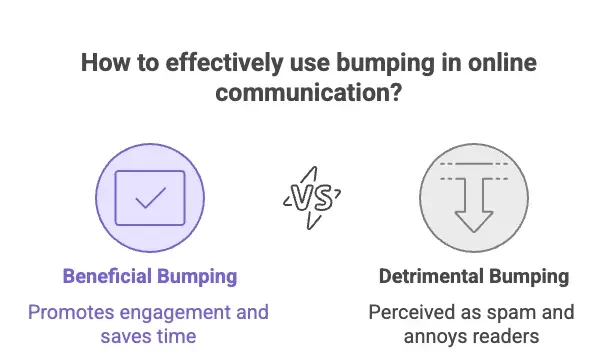
- Promotes engagement
Because many social media algorithms favour posts with recent activity, bumping can draw fresh attention to a post and encourage more responses. - Saves time
Instead of rewriting a long message or reposting content, you can write ‘bump’ to remind people of an earlier comment. - Reminds others politely
In messaging, a single bump can serve as a friendly reminder to respond or take action.
Pitfalls and overuse
- Perceived as spam
Many forums and community groups discourage bumping because endless bump comments can clutter discussions. Some boards consider pointless bumping a bannable offence. - Annoys readers
Repeated bumping may irritate other users and drive them away. Bumping a question too often can be perceived as spam, so it’s best to only bump a thread if your post is genuinely important. - Limited effect on algorithmic feeds
Modern social networks like Facebook use algorithmic ranking rather than strict chronology. Changes to Facebook’s algorithm have neutered the ability of bumps to make posts more noticeable. Therefore, bumping may not produce the same results as it once did.
Best practices
- Use bump sparingly
Only bump when a post hasn’t received attention and you genuinely need further responses. Avoid multiple successive bumps. - Add value when possible
Instead of writing just ‘bump’ consider adding additional information, answering your own question or tagging people who can help. This kind of engagement is more likely to be well-received. - Follow platform rules
Check the guidelines of each group or forum. Many communities prohibit bump posts or limit them to once per day. - Respect recipients in messages
When following up via email or chat, use polite language and avoid sending multiple bump messages; consider scheduling a reminder or using a different phrase if the context is professional.
Alternative ways to increase visibility without bumping
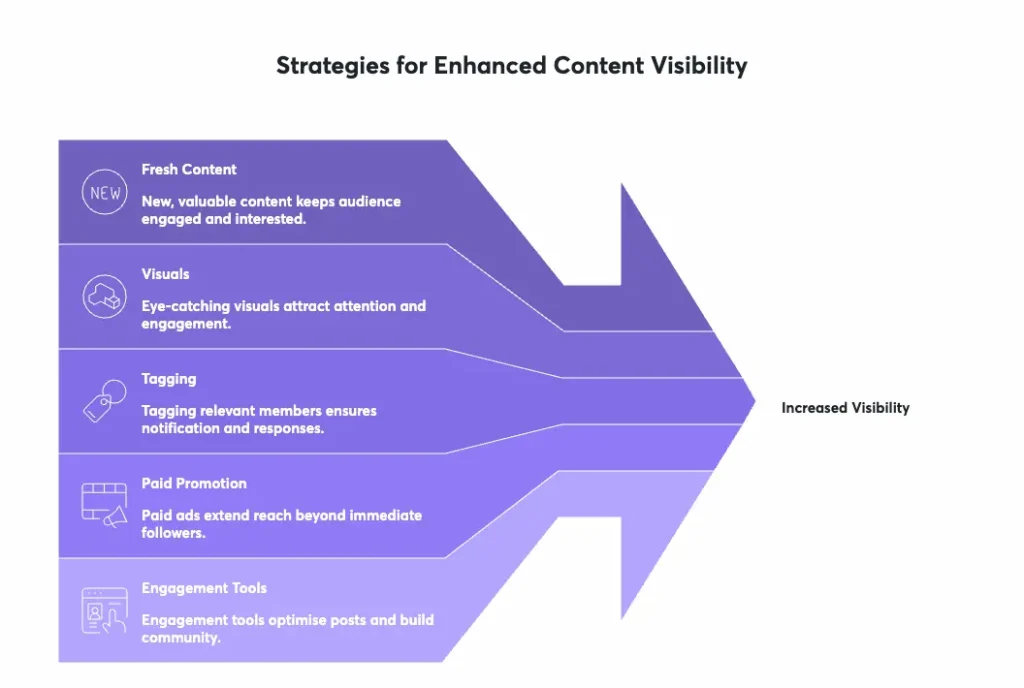
If you’re trying to get more eyes on your content, there are strategies other than bumping:
- Create fresh content
The best way to keep an audience engaged is to post new, valuable content. Instead of bumping an old post, try creating a follow‑up or an update that invites discussion. - Use visuals
Posts with images, videos or infographics often draw more attention. When you share an eye‑catching visual, you may not need to bump the post at all. - Tag relevant members
In groups, you can tag people who might be interested. This ensures they receive a notification and increases the likelihood of responses. - Consider paid promotion
For businesses, paid advertising on Facebook or Instagram can extend your reach beyond your immediate followers. - Leverage engagement tools
Many professional marketers partner with agencies like us to develop comprehensive social media strategies. Such agencies can help you optimise your social posts, create shareable content and build an engaged community without resorting to repeated bumping.
Bumping summed up
Bumping started as a practical trick on early internet forums. Users would make a quick reply to move their thread back to the top of the page. Over time, this behaviour migrated to modern social networks and messaging apps. The ‘bring up my post’ back‑ronym accurately describes what a bump does. It elevates a post or conversation so that others see it. While bumping can be useful for renewing discussions and reminding friends to respond, excessive or thoughtless bumps can annoy users and even violate community rules.
To maximise engagement on social media, use bumping sparingly and pair it with other effective strategies. Create new content, add valuable comments, and collaborate with digital marketing experts such as us for professional guidance.