



Whilst significant resources are invested in recruiting new foster carers, retention rates remain concerningly low. With more carers leaving than joining each year across the UK, and 60% of foster carers having considered resignation, fostering services must shift their strategic focus from purely recruitment-led campaigns to retention-focused marketing approaches.
This guide explores how marketing strategies can strengthen foster carer retention, reduce attrition rates, and create a more sustainable fostering community.
The Foster Carer Retention Crisis
The UK fostering sector needs approximately 25,000 additional foster carers in the coming years, yet around 13% of the foster carer workforce retires or leaves annually. Research from The Fostering Network reveals that 71% of completed foster carer applications are withdrawn by the applicant, and significant numbers leave within their first two years of approval.
The core Foster Carer retention challenges:
- Lack of support from fostering services (primary resignation reason)
- Insufficient respect from other professionals
- Burnout and poor well-being related to fostering pressures
- High staff turnover amongst supervising social workers
- Poorly handled allegations investigations
- Inadequate financial compensation
- Lack of meaningful information sharing for effective placement matching
Retention is key to provide the best outcomes for local children. Happy, supported foster carers become your most powerful advocates, with most new carers coming through word-of-mouth referrals. Every positive interaction existing carers have in the community represents recruitment marketing money cannot buy.
Why Marketing Matters for Foster Carer Retention
Marketing for retention extends far beyond recruitment campaigns. It encompasses internal communications, brand experience, recognition programmes, community building, and value proposition delivery. When fostering services treat retention as a marketing challenge, they create systematic approaches to engagement, satisfaction, and advocacy.
Effective retention marketing will:
- Reinforces the value proposition promised during recruitment
- Builds emotional connections between foster carers and the service
- Create community and peer support networks
- Demonstrates appreciation and recognition consistently
- Communicate support mechanisms proactively
- Addresses pain points before they escalate to resignation
Marketing thinking brings essential disciplines, such as audience segmentation, journey mapping, touchpoint optimisation, and consistent brand experience delivery. These frameworks help fostering services move from reactive crisis management to proactive foster carer engagement.
10 Foster Carer Retention Marketing Approaches
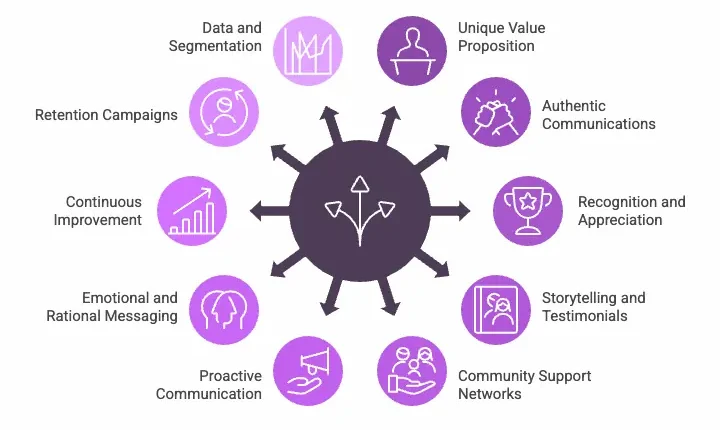
1. Delivering on Your Unique Value Proposition
Recruitment campaigns often highlight unique selling points such as award-winning training, mental health professionals, community networks, and local placements. Yet if these promises aren’t consistently delivered, carers experience a damaging disconnect between expectation and reality.
What you can do:
Audit your recruitment messaging against actual carer experiences.
Conduct exit interviews to identify gaps between promises and delivery.
Use internal communications to regularly showcase how your unique benefits are delivered. You can feature stories about successful training outcomes, highlight reduced caseloads, and demonstrate community support in action.
Ensure every touchpoint, from approval through ongoing support, reinforces your differentiators. Your value proposition should be lived, not just advertised.
2. Building Authentic Internal Communications Strategies
Foster carers consistently report that strong relationships with social workers and a sense of being treated as equals significantly reduce resignation considerations. Yet many fostering services focus communications primarily on administrative updates rather than relationship building and emotional support.
What you can do:
Develop a comprehensive internal communications strategy specifically for existing foster carers. This could include:
- Regular newsletters featuring carer stories, upcoming support opportunities, training schedules, and sector developments
- Email nurture campaigns targeting specific carer segments with relevant content and resources
- Dedicated portal providing 24/7 access to policies, training materials, peer forums, and practical resources
- Social media community groups enabling peer-to-peer support and informal connections
- Video updates from leadership demonstrating transparency and accessibility
- Quarterly surveys capturing carer satisfaction and addressing concerns proactively
The tone should be warm, appreciative, and partnership-focused rather than purely transactional. Communications should demonstrate that carers are valued members of a professional team.
3. Creating Recognition and Appreciation Communications
Foster carers report feeling undervalued by the wider system, yet recognition programmes significantly improve retention. Annual awards ceremonies, milestone celebrations, and public appreciation initiatives create emotional connections and demonstrate institutional respect.
What you can do:
Establish recognition programmes, including:
- Annual Foster Carer Awards celebrating achievements across categories like Rising to the Challenge, Long Service (5, 10, 15, 20+ years), and Foster Carers’ Choice (peer-nominated)
- Milestone celebrations marking approval anniversaries with certificates, thank-you letters, and small gifts
- Public appreciation campaigns during Foster Care Fortnight showcasing carer stories and achievements
- Children of Foster Carers Week recognising the vital contribution birth children make
- Thank-you communications from leadership, social workers, and children in care
Document these events through photography and video, sharing across your channels to demonstrate your appreciation culture. These materials also become powerful recruitment content, showing prospective carers the respect and recognition they’ll receive.
4. Leveraging Storytelling and Testimonial Content
Authentic carer testimonials proved powerful in recruitment; they’re equally valuable for retention. Sharing stories of how carers overcame challenges, received excellent support, or achieved breakthrough moments with children reinforces positive experiences and provides peer learning opportunities.
What you can do:
Create a content marketing programme specifically for existing carers:
- Video case studies featuring experienced carers discussing their fostering journey, challenges overcome, and support received
- Written testimonials in newsletters and on dedicated webpages highlighting positive matching experiences, training benefits, and social worker relationships
- Podcast series or audio interviews enabling carers to share experiences during commutes or downtime
- Fostering Moment campaigns encouraging carers to share meaningful moments, building community and celebrating successes
This content serves multiple purposes by providing peer validation, normalising challenges, demonstrating that support works, and creating a sense of belonging within the fostering community.
5. Facilitating Community and Peer Support Networks
Foster carers who feel they have strong support networks and connections with other carers are significantly less likely to consider resigning. Yet many services underinvest in community-building initiatives, treating carers as isolated individuals rather than members of a professional community.
What you can do:
Use marketing approaches to build and promote community:
- Peer mentoring schemes pairing new carers with experienced mentors, promoted through internal communications and facilitated through structured programmes
- Regular support groups (monthly, local) providing opportunities to connect, share experiences, and receive advice. Market these proactively rather than assuming carers will self-organise
- Annual conferences bring the fostering community together for learning, networking, and celebration during Foster Care Fortnight
- Social events, including summer picnics, Christmas parties, and family activities create informal connection opportunities
- Online forums and WhatsApp groups enabling 24/7 peer support and advice sharing
- Hub and constellation models like Mockingbird are creating structured peer support communities
Market these opportunities consistently through multiple channels, removing barriers to participation through childcare provision, accessible locations, and flexible timing.
6. Addressing Pain Points Through Proactive Communication
Exit interviews consistently reveal that foster carers leave due to inadequate support, poor allegations handling, insufficient respite care, and a lack of social worker continuity, among many other factors. Retention marketing requires addressing these pain points before they escalate to resignation.
What you can do:
Develop targeted communications addressing known retention risks:
- Allegations support communications clearly explaining the process, timeline, support available, and carer rights distributed preventatively, not just during crises
- Respite care promotion proactively marketing available respite options, normalising the need for breaks, and removing stigma around requesting support
- Social worker introduction protocols when changes occur, ensuring carers receive structured handovers, relationship-building time, and reassurance about continuity
- Training promotion highlighting how mandatory and optional training develops skills, builds confidence, and provides peer connection
- Financial transparency clearly communicating allowances, fees, expenses, tax relief, and payment schedules to address economic concerns
Frame these communications positively, emphasising support availability rather than problems. Use multiple formats, such as video, written guides, and infographics, to ensure accessibility.
7. Developing Emotional and Rational Messaging Balance
Marketing research demonstrates that emotional messages build brand loyalty and connection, whilst functional messages provide rational justification for decisions. Retention marketing requires both emotional reinforcement of why carers chose fostering, and rational demonstration that their practical needs are met.
What you can do:
Emotional messaging examples:
- “You’re making an extraordinary difference in children’s lives. Thank you for your commitment”
- “Your fostering family is part of our fostering family. We’re here for you”
- “Every moment you give a child safety, love, and stability creates lasting positive change”
Functional messaging examples:
- “Access 800+ specialist courses through our training hub, with 32 free mandatory courses”
- “Your supervising social worker maintains a caseload of just 15 families, ensuring personalised support”
- “24/7 out-of-hours support line connects you with experienced social workers within 30 minutes”
Blend these approaches across communications to create messages that resonate both emotionally (why fostering matters) and practically (how support works).
8. Implementing Feedback Loops and Continuous Improvement
Marketing disciplines include measurement, testing, and optimisation. Apply these to retention by systematically gathering carer feedback and demonstrating responsive action.
What you can do:
Establish feedback mechanisms, including:
- Quarterly satisfaction surveys measuring support quality, social worker relationships, training effectiveness, and overall satisfaction
- Exit interviews (conducted independently), capturing detailed resignation reasons and improvement opportunities
- Annual fostering reviews, including structured feedback questions about service delivery
- Suggestion schemes encouraging carers to propose improvements with visible follow-through
- “You said, we did” communications demonstrating how carer feedback drives service changes
Close the loop by communicating what you’ve learned and what you’re changing. This demonstrates that carer voices matter, building trust and engagement whilst actually improving service quality.
9. Creating Retention-Focused Campaign
Just as Foster Care Fortnight provides a recruitment campaign moment, create retention-focused campaign periods that specifically celebrate and support existing carers.
What you can do:
Develop annual retention campaigns such as:
- Foster Carer Appreciation Month featuring daily social media appreciation posts, surprise thank-you gifts, leadership visits, and special events
- Wellbeing Week promotes self-care strategies, mental health resources, respite care options, and burnout prevention, acknowledging the emotional demands of fostering
- Training Spotlight Quarter showcasing training opportunities, featuring carers who’ve benefited from professional development, and promoting upcoming courses
- Community Connection Days bring carers together for networking, peer learning, and relationship building
These campaigns create visible moments of investment in existing carers, demonstrate appreciation, and provide practical resources that support retention.
10. Leveraging Data and Segmentation
Marketing excellence requires understanding different audience segments and tailoring approaches accordingly. All foster carers have unique retention risks or support needs.
What you can do:
Segment your carer population and develop targeted retention approaches:
New carers (0-2 years): Highest attrition risk. Provide intensive support communications, buddy scheme promotion, skills-building training emphasis, and frequent check-ins acknowledging the adjustment period.
Experienced carers (3-10 years): Focus on professional development opportunities, leadership roles (mentoring, training delivery), recognition of expertise, and advanced placement opportunities matching their skills.
Long-serving carers (10+ years): Emphasise appreciation and legacy, be involved in service development and policy consultation, celebrate their contribution publicly, and ensure they feel valued as sector experts.
Carers experiencing allegations: Immediate, intensive support, clear process explanations, emotional support resources, and post-resolution follow-up to ensure they feel supported to continue.
Specialist carers (disabilities, complex needs, parent-child): Targeted training promotions, specialist peer networks, recognition of advanced skills, and appropriate financial compensation messaging.
Tailor your communications, support offerings, and engagement approaches to these segments, ensuring relevance and resonance.
Measuring Retention Marketing Success
Effective retention marketing requires clear metrics demonstrating impact:
- Retention rates: Percentage of carers remaining after 1, 2, 5, 10 years
- Resignation reasons analysis: Tracking exit interview themes and trends
- Satisfaction scores: Quarterly survey results measuring support quality, social worker relationships, and overall satisfaction
- Engagement metrics: Training attendance, support group participation, survey response rates, internal communications open rates
- Net Promoter Score (NPS): “How likely are you to recommend fostering with us to others?”
- Word-of-mouth referrals: New enquiries from existing carer recommendations
- Placement stability: Reduced placement disruptions, indicating supported, confident carers
Track these metrics consistently, report trends to leadership, and demonstrate the business case for retention marketing investment.
The Business Case for Retention Marketing
The financial argument for retention marketing is compelling. Losing experienced carers can create:
- Recruitment cost to replace them
- Lost placement capacity during recruitment and approval
- Reduced placement quality from inexperienced replacements
- Increased placement disruption for children
- Damage to service reputation and word-of-mouth referrals
- Decreased morale amongst remaining carers
Investing even modest resources in retention marketing – £500-£1,000 per carer annually through communications, recognition, events, and support – delivers a significant return on investment by preventing costly turnover.
Moreover, retained carers become advocates. Research shows most new carers come through word-of-mouth from existing carers. Your retention marketing directly fuels recruitment by creating satisfied advocates who naturally promote your service.
Retention is Recruitment
The most effective foster carer recruitment strategy involves retaining current foster carers. When fostering services apply marketing disciplines, such as strategic communications, community building, recognition programmes, storytelling, and measurement to retention, they create sustainable cohorts of satisfied, supported carers who become powerful advocates.
Retention marketing transforms the fostering service relationship from transactional (we need placements; you provide them) to relational (we’re partners in changing children’s lives). It demonstrates that carers are valued professionals deserving respect, support, and appreciation. It builds communities where carers support each other through challenges. It ensures the promises made during recruitment are consistently delivered throughout the fostering journey.
In a sector facing acute workforce shortages, fostering services cannot afford to treat retention as an afterthought. Marketing approaches provide frameworks, disciplines, and tactics proven to build engagement, loyalty, and advocacy. By investing in retention marketing, fostering services don’t just keep carers. Instead, they create thriving communities of supported professionals who naturally attract others to join them.
The question isn’t whether you can afford to invest in retention marketing. The question is whether you can afford not to.
Explore our fostering marketing services on offer and get in touch to find out how we can transform your retention efforts.